
The Roles We Never Question
This letter is actually about my butt.

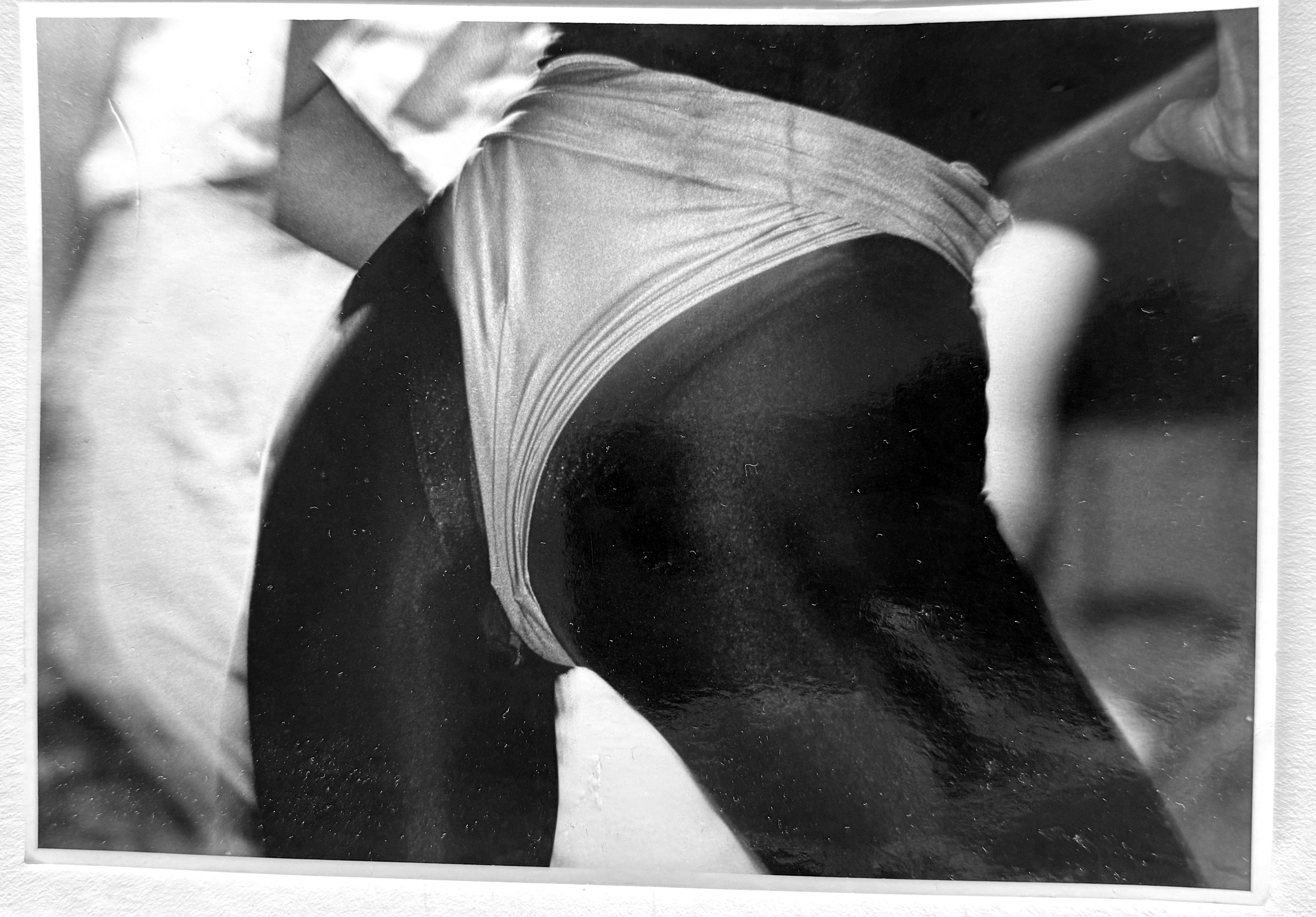
It’s an embarrassing tale that happened when I was about 20 years old. At the time, I was doing well in school. I was strong across subjects, even math. I was doing well in history, English, and French, and I was fully engaged in both academic and social life. I participated in speech and debate, I had a close-knit group of friends, and I had recently been asked to perform in the annual show, árshátíð. It felt like recognition, the kind you quietly work toward without always naming it.
The photograph itself is kind of cool. It captured a moment from the performance, a strong, sculptural line, my body mid-movement. It has a distinctly ’80s or early ’90s quality to it, the kind of image that could easily have been used as a poster for an aerobics film with Jamie Lee Curtis. In another context, it might have felt flattering. Even powerful.
But that’s not what happened.
Someone took the image and ran it through the copy machine. Again and again, producing what felt like an endless number of copies. And one morning, I walked into school and saw it everywhere, on walls, in hallways, in people’s hands. My body, or more specifically my ass, had been turned into something public.
Everyone knew it was me. No one asked.
What unsettled me most was not only the exposure, but the assumption that seemed to come with it, that I would enjoy this kind of attention, that I would somehow want to be seen this way. I didn’t. This was not the attention I was after.
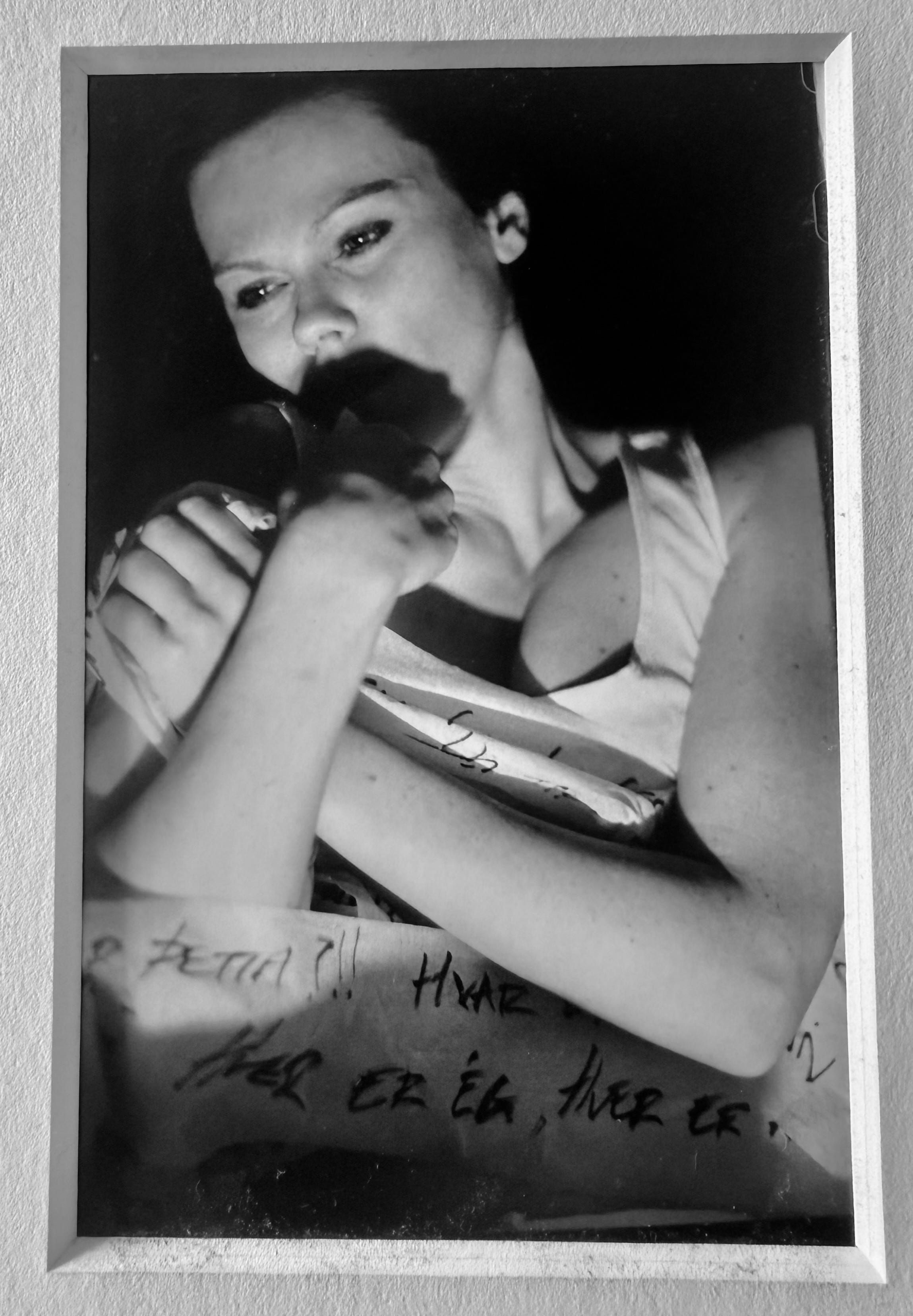
At the time, I was working hard to be seen as something else entirely. I wanted to be recognized as intelligent, as thoughtful, as someone who could think independently. I had a clear goal: to earn the grades that would allow me to study in America. That dream had been with me for years, and I approached it with discipline. I showed up. I did the work.
And yet, in what felt like a single moment, that narrative shifted.
It didn’t happen through a conversation or a decision. There was no formal turning point. But something changed in how I was seen, and perhaps more importantly, in how I began to see myself. I became, in that environment, the girl in the ass photo.
Looking back, what stays with me is not just the embarrassment, but how quickly a role can be assigned and how quickly we step into it. There was no conscious agreement on my part. I didn’t pause to ask whether it felt true or aligned. I adapted. It was instinctive, almost immediate.
That moment did not exist in isolation. It tapped into something that had already been forming for years.
I had always been drawn to beauty. I loved style, fashion, and design. I enjoyed putting outfits together and creating aesthetics around me. But where I grew up, that interest did not always align with being perceived as intelligent. There was an unspoken hierarchy: seriousness was associated with intellect, and beauty was often dismissed as superficial.
So I learned, early on, to compensate. I worked harder to prove myself. I became more deliberate in how I spoke, how I presented myself, how I positioned my interests. At times, that effort distanced me from something more natural and easeful within me.
I remember loving my visits to Café Paris in Reykjavík, listening to older philosophers in conversation. They always sat at the same table after a refreshing pool session (all year round), and I was drawn to it. Curious. Engaged. I knew, in a quiet and grounded way, that I was intelligent. And yet, in certain environments, that knowing would disappear, replaced by a need to prove something that was never actually in question.
Years later, when I performed my solo show in New York, I received strong reviews. But there was one line in The New York Times that read: early plays of August Strindberg were considered immature as well. Ouch - that crushed me. A passing comment about immaturity that shouldn’t have carried the weight it did, but it did, because it echoed something much older, something I had already internalized.
That is the nature of these roles. They are rarely formed in one moment, but they are often reinforced by them.
At some point, someone projects an idea onto us, an identity, a narrative, a way of being. And instead of questioning it, we absorb it. We carry it forward, sometimes for years, without examining whether it was ever ours to begin with.
We tend to think of identity as something we consciously construct, but much of it is inherited. It is shaped in early environments, in subtle interactions, in moments of visibility or vulnerability. We learn who we need to be in order to belong, to be accepted, or simply to move forward with less resistance.
And then we become it.
The roles we never question are often the ones that define us most strongly, and it’s our responsibility to look at our roots and origin to study ourselves like a character from a Strindberg play. That’s where the real work begins. Not in fixing or reinventing, but in seeing clearly.
In my work, I call this an identity audit. It is the practice of stepping back and looking at the roles you have been carrying, the ones you chose, and the ones you never consciously agreed to and asking a simple but powerful question:
Is this still true or valid?
Because identity is not fixed. It’s practiced.
It is shaped in small, consistent choices in how we respond, what we believe, the promises we keep to ourselves, and who we allow ourselves to be.
And the moment we begin to question what we once accepted without thinking, something opens.
The moment you question the role is the moment you begin to return to yourself.
Xo
AR.